
Scanning
Modern Film Scanning, Built on Decades of Experience
For more than twenty years, drum scanning was at the heart of our film digitization workflow, and it earned that place for good reason. We've produced countless drum scans for photographers, artists, galleries, and museums over the years.
But advances in digital sensors, precision optics, specialized lighting, and capture software have changed what's possible. After extensive testing and utilizing our years of scanning experience, we've created a modern camera-based scanning system that consistently delivers drum scan level image quality while less invasive for the film.
While the process has changed, our goal and philosophy hasn't. It has always been to produce the finest digital film scans possible while treating every original with the care it deserves.
Designed With Your Film In Mind
Every piece of film we scan is unique. Some film is coming straight from development while others are decades old. Some are irreplaceable family memories, a historical archive, or a one-of-a-kind original like a Polaroid Type 55 negative. Regardless of age or value, our approach minimizes handling while maximizing image quality.
Unlike traditional drum scanning, our process requires no wet mounting, no mounting fluids, and no rotating acrylic drum. Originals remain safely supported in precision-engineered film carriers designed to maintain excellent flatness while minimizing physical contact. In our view, the best preservation method is doing less to the original.
Color Accuracy Begins at Capture
Color negative film has always been one of the most challenging photographic materials to digitize accurately - especially with drum scanners. Traditionally, much of the work is done in post scanning software adjustments, attempting to interpret color from information that wasn't fully captured in the first place. Multi-colored grain was always an issue with drum scanners and color negative film.
Our capture system approaches the problem differently.
Using specialized multispectral illumination designed specifically for photographic film, we are able to create a unique profile for each roll or set of negatives. With this profiling, much of the color information is resolved during capture rather than reconstructed afterward. Creating a stronger foundation at the moment of capture gives us cleaner color separation, smoother tonal transitions, reduced color noise, and more consistent results across a wide range of film stocks. And ultimately this leads to a more faithful digital interpretation of the original negative.
Experience Matters
We've spent decades working with and testing virtually every major film format and scanning technology, from drum scanners to virtual drum systems, flatbed scanners, and today's camera-based capture systems. This range of experience lets us make informed decisions throughout the process.
Knowing how a transparency should hold shadow detail, how color negative film should render skin tones, or when grain should remain natural rather than artificially sharpened comes from years of working with film, not simply from owning the latest equipment.
Our experience is what brings our top-tier equipment to its fullest potential.
Built for The Best Results
Our system is centered around a 150-megapixel Phase One digital back, a specialized gear driven reproduction body, precision reproduction optics as well as a purpose-built imaging platform designed for the highest levels of consistency and accuracy.
The system meets the imaging standards required for the most demanding archival workflows and continues to evolve alongside modern preservation practices. It's the same class of technology trusted by museums and cultural heritage institutions worldwide because it delivers the results we've come to expect, while remaining gentle on originals.
From 35mm to Large Format + New Options
We scan virtually every photographic film format, including:
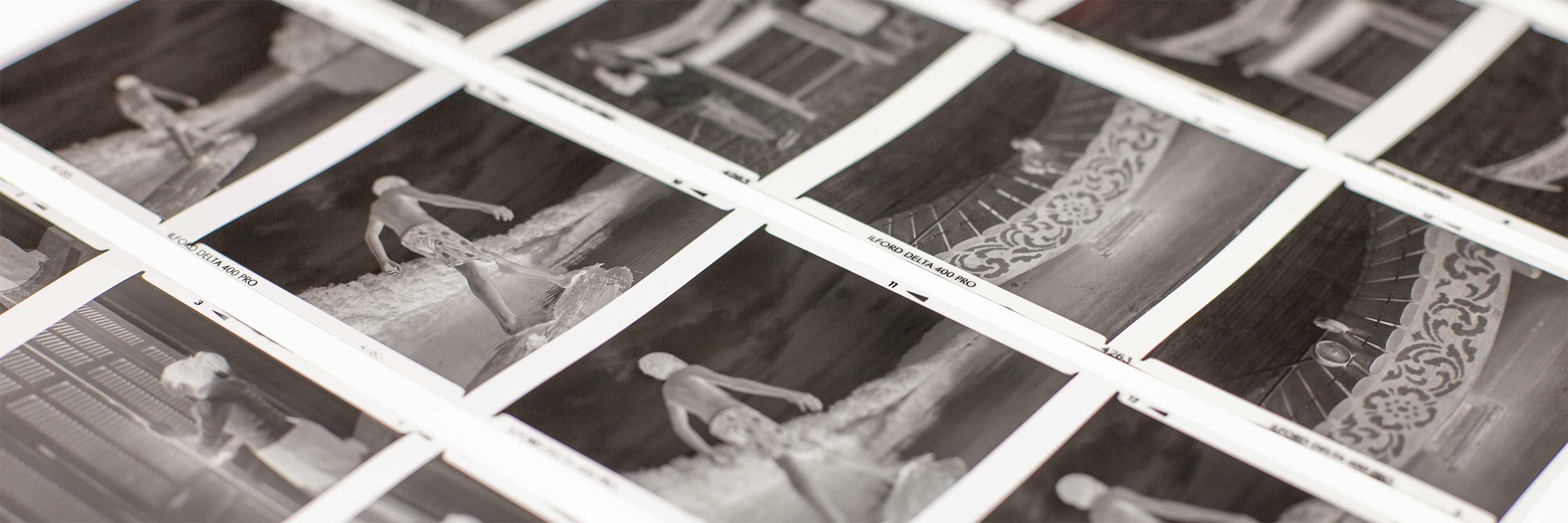
• Negative Sheets for digital Contact Sheets
• 35mm negatives and transparencies
• 120 and 220 medium format film
• Large format sheet film through 8×10
• Oversized sheet film by consultation
Unlike virtual and traditional drum scanners, our workflow also allows us to digitize entire uncut rolls when needed, advancing the carrier frame by frame and preserving the original numbering sequence.
And most exciting is the ability to bracket scan exposures to create a file with even more dynamic range than previously possible. Our lighting can be adjusted in 1/10th stop increments while our camera can be adjusted in 1/3rd stop increments. That gives us incredible precision with our base exposure and bracketing workflow.
Why We Chose This Workflow
Drum scanning earned its reputation by producing extraordinary image quality, and we have tremendous respect for what those systems accomplished. Having used them professionally for so long, we understand both their strengths and their limitations.
For the vast majority of photographic film, our system delivers image quality comparable to the finest drum scans, with real advantages in film handling, scan bracketing options, and particularly in the reproduction of color negative film. We didn't move away from drum scanning because this was easier; we moved forward because we believed we could produce an equal if not better scan with more options during the process, while treating your original film with even greater care.
What You'll Receive
Every scan is individually evaluated and delivered as a high-resolution file with excellent highlight and shadow detail, natural grain rendition, and balanced color appropriate to the original material. Files are provided with a general crop and overall tonal balance, giving you a strong starting point for printing or further image refinement.
For Clients who would like additional work, we also offer custom color corrections, tonal matching, retouching, spotting, restoration, and print preparation as separate services.
Whatever your goal is, our objective stays the same: to honor your original while creating a digital file worthy of it.
Film Scanning Pricing
All scans are transferred to your USB drive or hard drive at no charge. We can also provide media for transfer or an upload link to download your scans; pricing is available on request and will depend on the total size of the job.
Sizes listed below are approximate. For file sizes larger than listed, please fill out our estimate form to receive a custom quote for your project.
Turnaround
Normal turnaround for film scanning is 1-2 weeks. Please Note: While we always try to return your job as quickly as possible, actual turnaround time depends on quantity, film formats, and our current in-house workload. Please call for scheduling if your project requires a quicker turnaround; we try to accommodate when possible. Rush services are available.
For Sheet Film, please add 20% to the prices below. $50.00 minimum applies on all Film Scanning orders. If you plan to order prints or other services, these costs can be applied towards this minimum.
| Final Size at 300 dpi | Single Scan | 2-10 | 11-50 | 51-100 | 101-200 |
|---|---|---|---|---|---|
| 8x10 (20mb) | $20.00 ea | $17.00 ea | $15.00 ea | $13.00 ea | Estimate |
| 16x20 (80mb) | $40.00 ea | $34.00 ea | $30.00 ea | $26.00 ea | Estimate |
| 24x36 (225mb) | $60.00 ea | $51.00 ea | $45.00 ea | $39.00 ea | Estimate |
| 30x40 (300mb) | $70.00 ea | $59.50 ea | $52.50 ea | $45.50 ea | Estimate |
| 40x50 (500mb) | $95.00 ea | $80.75 ea | $71.25 ea | $61.75 ea | Estimate |
| +40x50 | Estimate | Estimate | Estimate | Estimate | Estimate |
$50.00 minimum charge with this service. Negatives that require special handling, may incur an extra charge.